FidoNet FileGate
Back before the internet was a household thing, there was FidoNet — a scrappy, volunteer-run network connecting thousands of bulletin board systems (BBSs) around the world. People dialed in over phone lines to chat, swap messages, and download files, all stitched together by sysops who kept the whole thing running out of their spare bedrooms and basements.
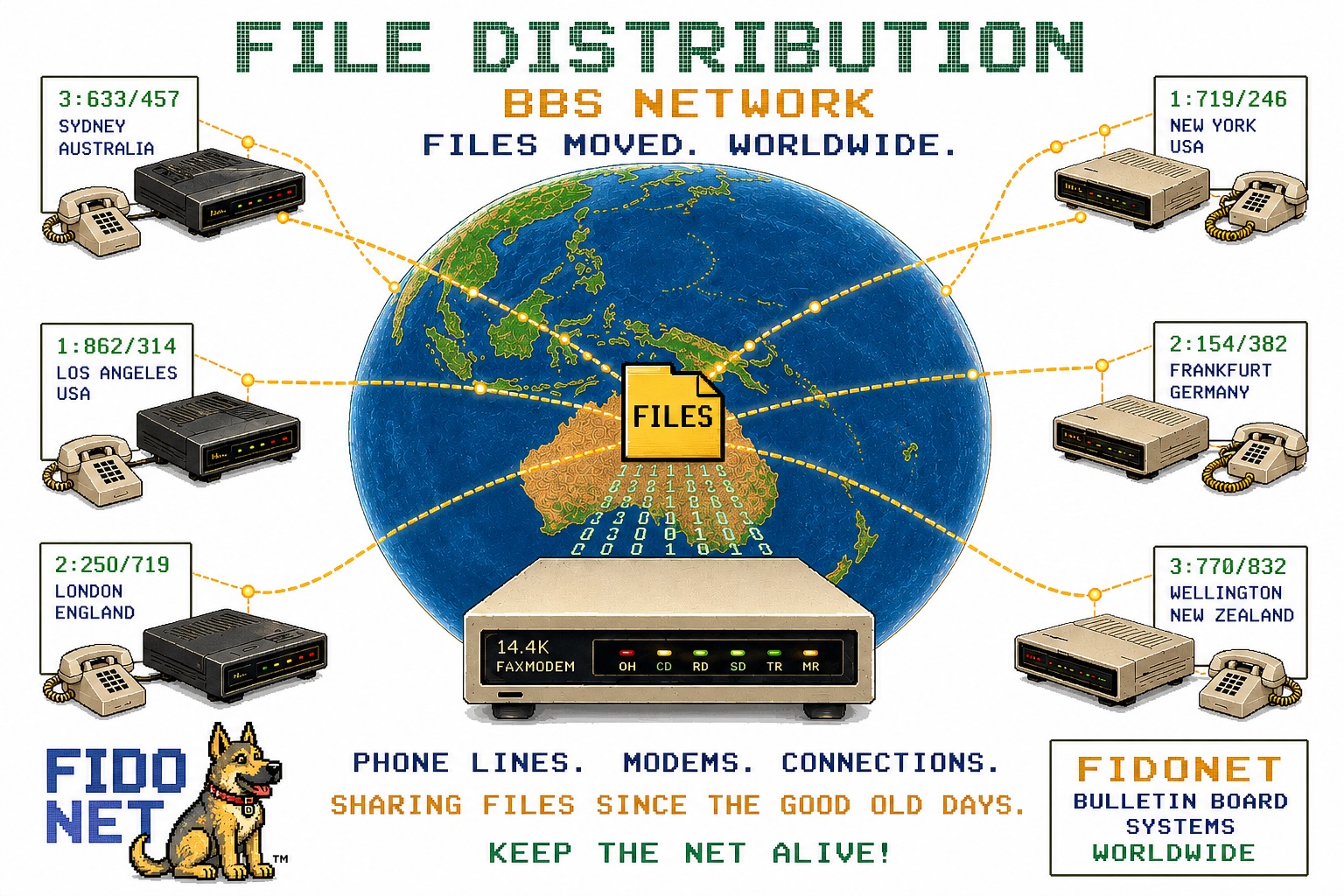
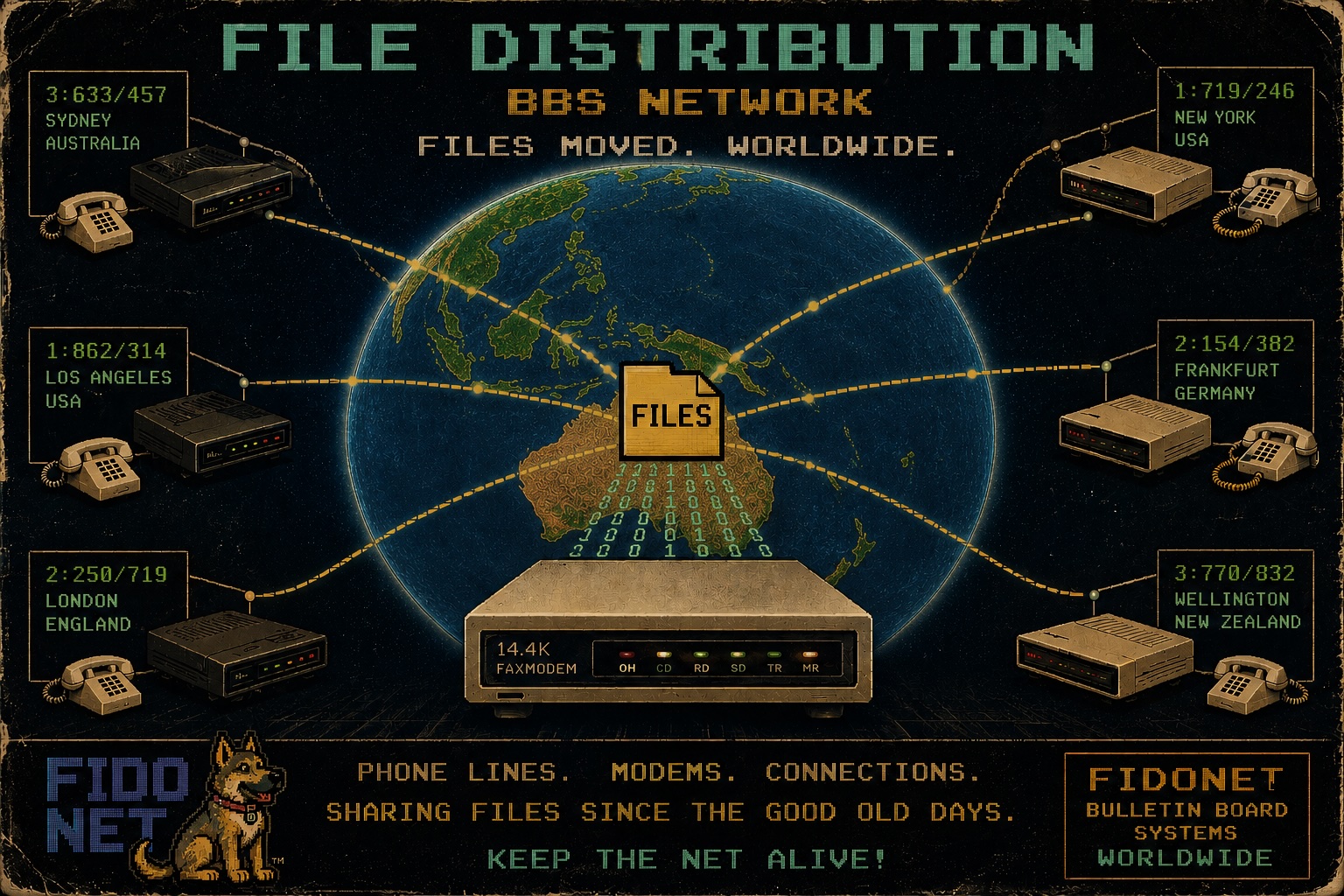
One of the coolest parts of FidoNet was how it handled files. Instead of everyone hunting down their own downloads, files got organized into “file echoes” — shared collections that automatically copied themselves across the network, node by node, so a file uploaded in one city could show up on a board halfway across the world a day or two later.
That’s where the FileGate comes in. Think of it as a translator standing at the border between FidoNet and other networks. Its job was to take files circulating on one side and pass them along to the other — so FidoNet users could get their hands on files from outside networks, and vice versa, without anyone having to manually shuffle things back and forth. If echomail was FidoNet’s way of syncing conversations across the network, the FileGate did the same thing for files.
It wasn’t flashy, but it was essential plumbing — quietly keeping file libraries in sync across a sprawling, decentralized network long before “syncing” was something we took for granted.